The Sailing Ship Preussen
There was a large sailing ship anchored off Cannes. On AIS, we could see that she was called Royal Clipper. We googled the name and discovered that Royal Clipper is a five-masted ship built to a design inspired by the German sailing ship Preussen. Preussen was lost in the English Channel in 1910 and, almost a century later, her spirit was revived in the cruise ship Royal Clipper, which has a crew of 106 and can accommodate 227 passengers.
Now Royal Clipper had arrived in Cannes and lay at anchor close to the old harbour, while passengers were ferried back and forth in tenders.
We passed the impressive sailing ship — one of the largest of her kind in the world — and entered the harbour. Almost at the same moment, a helicopter landed on the helipad on the breakwater to port.
A berth in the harbour
We called the harbour office on VHF but received no reply, so we found an empty berth ourselves.
Once we were moored, we walked up to the office. There was a long counter in reception. Behind it sat a young man and a young woman. Farther along the counter were three older men with VHF radios and a screen from which they could monitor the entire harbour.
To the left, a smartly dressed middle-aged woman presided over a counter of her own. Behind her were a couple of offices occupied by what appeared to be yet more administrative staff.
We approached the young man.
“Good afternoon. We are from the Danish boat Heron and have berthed at E43. We would like to stay for the night,” we said, handing him our registration document and insurance certificate.
The young man looked enthusiastically at the registration document.
It had been issued by the Danish Cruising Association, FTLF. At the top of the front page is a royal crown. Beneath it, in elegant lettering, are the words Danish Yacht Register. In the centre are Heron’s details, our names and photographs of us and Heron. At the bottom is an impressive stamp and the signature of the association’s secretary.
On the back is a letter from the Danish Ministry of Justice, written in suitably formal English, confirming that Danish pleasure craft are entitled to fly the swallow-tailed Danish flag.
An imposing document.
It had always been treated with considerable respect in French harbour offices.
The young man entered a number of details into his computer and asked us to speak to René, who appeared to be the most important of the three older men.
We walked six steps along the counter, caught René’s eye and repeated our opening line. We can deliver that in almost flawless French.
René studied the screen showing the harbour. Then he looked at his computer. Finally, he pulled out a large sheet of paper. He studied it for some time, wrote something down and crossed something else out.
At last, he looked up.
“C’est bon.”
We walked the six steps back to the young man, told him that René had said c’est bon, received an invoice and paid it.
After 30 minutes, we were officially registered for one night.
Two goals
When we left our home port of Humlebæk 15 months earlier, we had two goals:
The Mediterranean.
To stop in places we liked.
With Cannes, we had reached the goal of our journey.
Cannes – a lovely harbour and a lovely town
The harbour has room for around 1,000 boats. There are quite a few megayachts and large, beautifully maintained classic sailing yachts with solid teak decks, gleaming brass winches and varnished masts and booms.
But there were smaller boats too.
On the pontoon where we were berthed, some were lived aboard all year round. An entire family lived on an older 26-foot sailing boat: two adults, three children and a dog.
A sharp contrast to the megayachts, where the number of people onboard had been reduced to the absolute minimum — usually just the obligatory two or three crew members.
The harbour borders the old town and La Croisette, the promenade running along the waterfront. Many, if not all, of the expensive luxury brands have their own elegant shops here. There are also grand hotels, good restaurants and pleasant cafés.
The promenade is also home to the Palais des Festivals et des Congrès. This is where the famous Cannes Film Festival is held, along with many other festivals and conferences.
During our stay, there was a television festival. Participants had come from all over the world. They networked in restaurants and cafés and conducted important conversations on their mobile phones — unless, of course, they were simply concentrating on looking famous.
Others held breakfast meetings aboard megayachts their companies had chartered for the festival, before entertaining clients until late into the night.
In the old town is the Musée de la Castre, housed in a former monastery high above the harbour, with sweeping views across the bay.
The museum has a fine collection of antiquities, ethnographic art and musical instruments. Much of it was donated by the Dutch aristocrat Tinco Martinus Lycklama à Nijeholt, who collected artefacts during his travels through Persia and the Middle East in the 19th century.
We enjoyed the town’s mixture of French and international atmosphere.
We cycled along the promenade all the way to Palm Beach, where kite- and windsurfers performed aerial acrobatics during the two days when the Mistral blew hard.
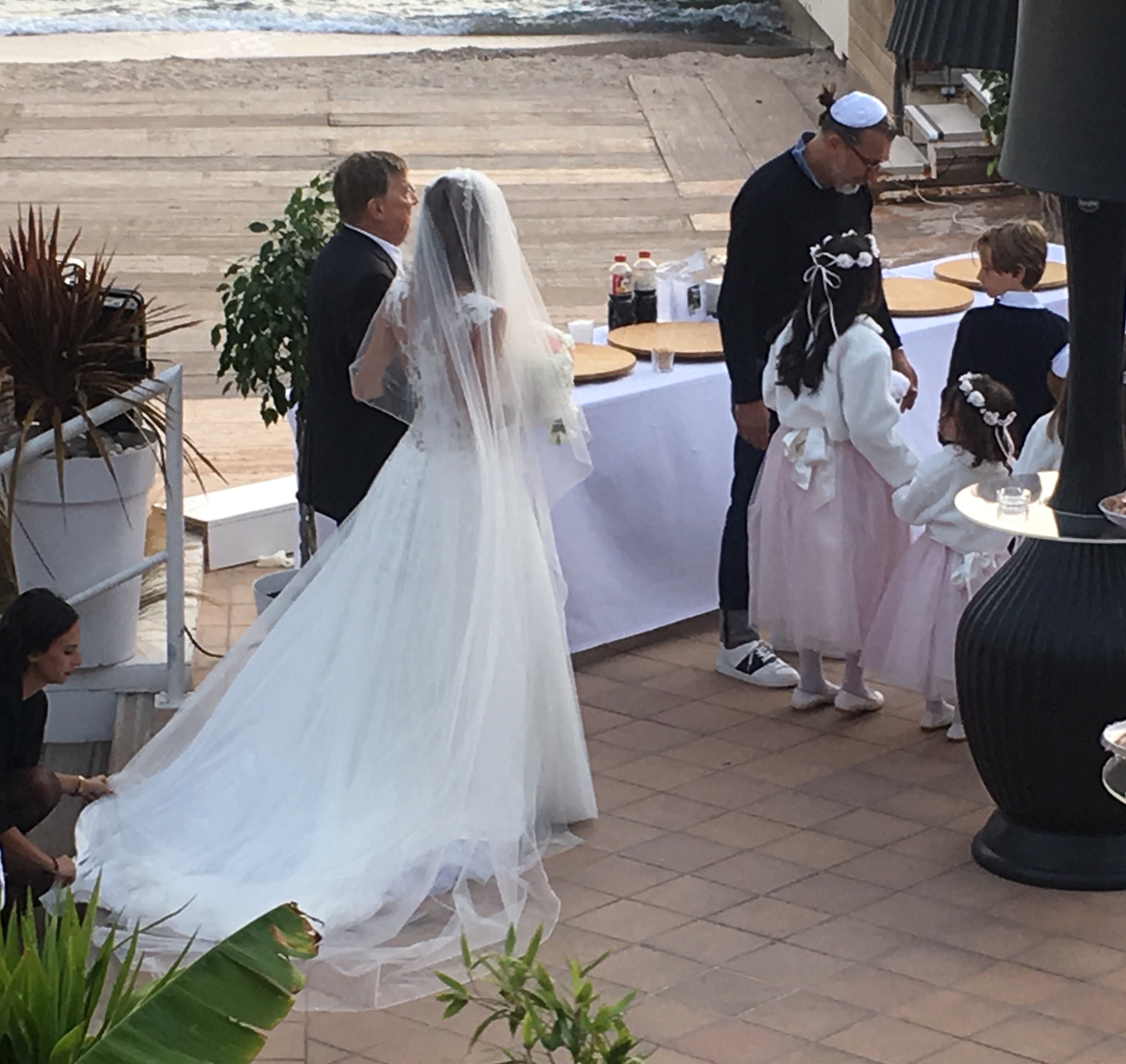
We walked along the beach and went swimming. We watched a Jewish wedding ceremony on the elegant pier in front of the Carlton Hotel. We visited the market and one day took the bus inland to the mountain town of Grasse, also known as the perfume capital of the world.
Another Danish boat
After a couple of days, another Danish boat arrived a few berths away from us.
It belonged to Henrik and Karin from Copenhagen. They were coming to the end of their fifth sailing season in the Mediterranean.
For the first two seasons, they had driven from Denmark to Croatia in the spring, towing their 24-foot motorboat on a trailer. In autumn, they had made the long drive back to Denmark again.
For their third season, they drove to Italy. When it was time to return home that autumn, they decided to leave the boat and trailer there for the winter.
A couple of months earlier, they had replaced the boat with a larger one.
Now they had arrived in Cannes. The boat would spend the winter here while they returned to Denmark.
Wintering in Cannes?
Cannes looked like a very good option for a winter berth.
We had noticed several empty spaces. A couple of them were even on what we had already begun referring to as ourpontoon.
But alas…
“A winter berth? You should have applied in May,” the young woman exclaimed, staring at us in disbelief from behind her counter in the harbour office.
Our circular questions — “Where can we stay this winter?”, “Who is going to use our berth?”, “What are we supposed to do?”, “Are there spaces in other harbours?” — had absolutely no effect.
So we went to René.
He thought it would be difficult. But, much to the young woman’s irritation, he nevertheless recommended that we submit an application through the harbour’s website.
With the young woman’s help, we applied online for permission to remain in the harbour until 31 March.
Nobody could tell us how long it would take to receive an answer.
“But,” the young woman reassured us, “it will definitely be rejected. There is no room for any more boats.”
Port Garavan in Menton
We started looking for other winter harbours as well.
And eventually we found one in Port Garavan in Menton.
“It was difficult, but we managed it,” Albert explained.
He was international marketing director of a Romanian booking company. Their headquarters were in Bucharest and, almost on their own initiative, they had started searching for a winter berth for us.
“And,” he added, “this is France, not Italy or Spain. So you can forget about negotiating the price.”
After ten wonderful days in Cannes, we continued east towards Menton, close to the Italian border.
Antibes – home of the megayachts
On the way, we stopped in Antibes.
It is one of Europe’s great centres for megayachts.
The largest were moored in the outer harbour. Among them was Dilbar, owned at the time by Russian billionaire Alisher Usmanov and one of the world’s largest private yachts.
(Bonus information for anyone interested in megayachts: Dilbar is almost the size of the Oslo ferry. The ferry can carry 1,790 passengers. Dilbar accommodates around 40 guests.)
Farther inside was a basin for the smaller megayachts — the poor little things measuring as little as 25 metres.
There must have been around fifty of them, lying side by side.
In the beautiful old town, one company offered to recruit crew for megayachts, another offered to train them, and a third offered financial solutions with the curious promise of helping crew members become financially independent.
Most of the megayachts in Antibes sail for only a few weeks each year. Whether it was the fuel consumption of perhaps 400 litres of diesel an hour or simply a lack of time that limited how often their owners allowed themselves to be transported around the Mediterranean by their crews, we never discovered.
We stayed in Antibes for a couple of days.
One morning, the wind came from the west.
We left the harbour, switched off the engine, hoisted the sails and swept past Nice and Monaco until we reached our winter harbour in…
Menton.