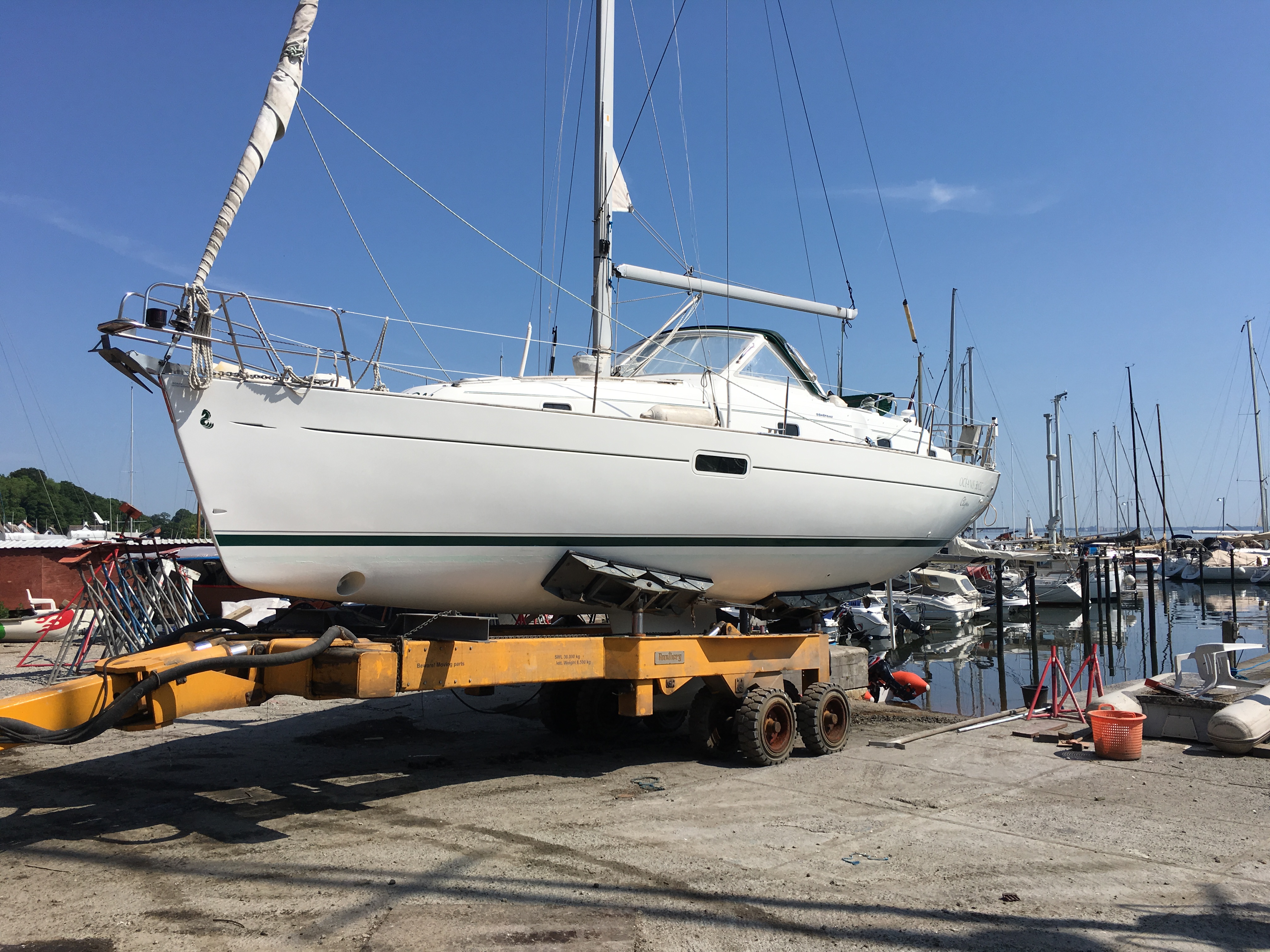
The Bottom Needs Cleaning Every Year
The previous spring, Heron had been in the water for two years before we hauled her out to clean and antifoul the bottom, polish the topsides and replace the zinc anodes.
The bottom was so heavily fouled that it was obvious we would have to do the job every year from then on.
Late in the spring, once all the other boats at the yard had been launched, it was our turn to haul Heron out and prepare the bottom and topsides.
Pressure-Washing the Bottom
At midday on Monday, Heron was hauled out. The bottom was cleaned with a pressure washer. Late in the afternoon, Heron was taken off the yard’s special trailer and blocked up with three steel stands on each side.
Topsides, Antifouling and Bow Thruster
I spent the rest of the day washing the topsides with fresh water, carefully scraping off loose antifouling with a putty knife, removing the bow thruster propeller and cleaning off a heavy growth of barnacles.
Oxalic Acid for Stains
On Tuesday, I bought oxalic acid at Matas, mixed it with four parts fresh water and applied the mixture to the topsides with a sponge. I left it for 15 minutes and then rinsed it off with fresh water. The brown and yellow stains disappeared, leaving the topsides gleaming white.
Antifouling the Bottom
Next, I masked off the waterline and applied antifouling paint with an outrageously expensive short-nap paint roller – DKK 125.
The roller turned out to be worth every penny because it didn’t pull flakes of old paint off as I worked. Finally, I also applied antifouling to the bow thruster propeller.
Polishing the Topsides
On Wednesday, I touched up the antifouling in exposed areas, gave the bow thruster propeller another coat and removed the masking tape. I then wiped down the starboard topsides with a cloth wrung out in a mixture of fresh water and citric acid (9:1), polished the entire starboard side with Dulon 14 and finally polished one-third of it with Dulon I and II.
On Thursday, I finished polishing with Dulon I and II, gave the entire port side the same treatment as the starboard side and ended the evening by replacing the zinc anodes and reinstalling the bow thruster propeller.
On Friday, I managed to polish the propeller with a wire brush fitted to a drill before Heron was launched shortly after midday.
Now the Bow Thruster Works
Once Heron was back in the water, the first thing I did was activate the bow thruster – and this time the bow moved.
Then I sailed out of the harbour and measured an increase in speed of more than 15%.
For cruising sailors like us, it really doesn’t matter how fast we sail.
… But it feels so much better to be the one doing the overtaking rather than the one being overtaken.