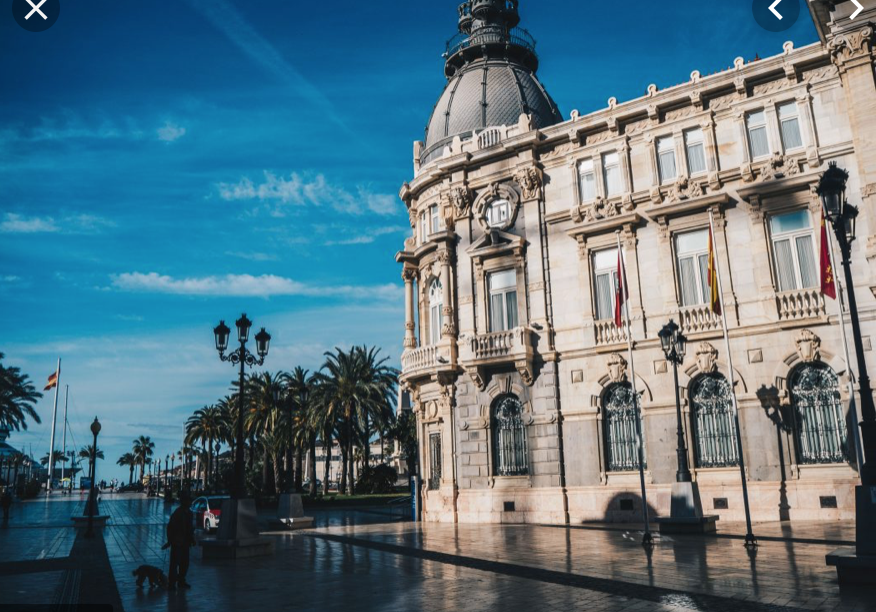
Gregorio was right.
Cartagena has a very long history — far longer than we had imagined.
Some 50,000 years ago, Neanderthals lived in caves near what is now the city. Much later, an Iberian settlement grew up around the natural harbour, helped by the rich deposits of silver in the surrounding hills.
Those same advantages eventually attracted the Carthaginians. In 227 BC, they made Cartagena an important military base for their possessions on the Iberian Peninsula. It was from here that Hannibal set out on his famous campaign against Rome, leading an army of some 38,000 infantry, 8,000 cavalry and 38 elephants towards the Alps.
While Hannibal was away fighting the Romans, however, Rome struck back. A Roman army captured Cartagena and, just as importantly, gained control of its valuable silver mines.
Under Roman rule, mining expanded dramatically. At one point, around 40,000 slaves are said to have worked in the mines, producing silver that helped finance the continuing expansion of the Roman Empire.
The city itself became increasingly important. The Romans called it Carthago Nova — New Carthage — and around two centuries later, under Julius Caesar, it was granted the status of a Roman colony.
Roman prosperity did not last forever. As the empire declined, so did Cartagena, and in AD 425 the city was devastated by the Vandals. Around 125 years later, it began another chapter when the region became part of the Byzantine Empire and the city was rebuilt.
Over the centuries that followed, control of Cartagena changed hands again. Under Muslim rule, it eventually became part of the Emirate of Córdoba. Centuries later, Christian forces conquered the city, and it became known as Cartagena.
Its natural harbour, however, remained its greatest asset. By the second half of the 16th century, Cartagena had once again become strategically important, this time as a major Spanish naval base.
That pattern of rise, decline and renewal has continued throughout the city’s more recent history, with each period leaving another layer behind.
Perhaps that is what makes Cartagena so interesting today. Roman ruins, old fortifications and naval buildings sit side by side with a modern Spanish city that is once again trying to reinvent itself.
Which brings us back to Gregorio.
He believed that growing tourism would bring Cartagena another period of prosperity over the next five or ten years.
After more than two thousand years of Cartagena reinventing itself, perhaps he had a point.