A Life Under Full Sail
There were no locks on the next stretch. That meant we could cover a lot of kilometres if we sailed for long enough. I downloaded John Hjarsø’s book A Life Under Full Sail, which we listened to as the late-summer landscape slowly drifted by.
We met more pleasure boats coming the other way than on previous days, and at one point we passed a Swedish boat – the first Scandinavian boat we had seen since leaving Lübeck a week earlier.
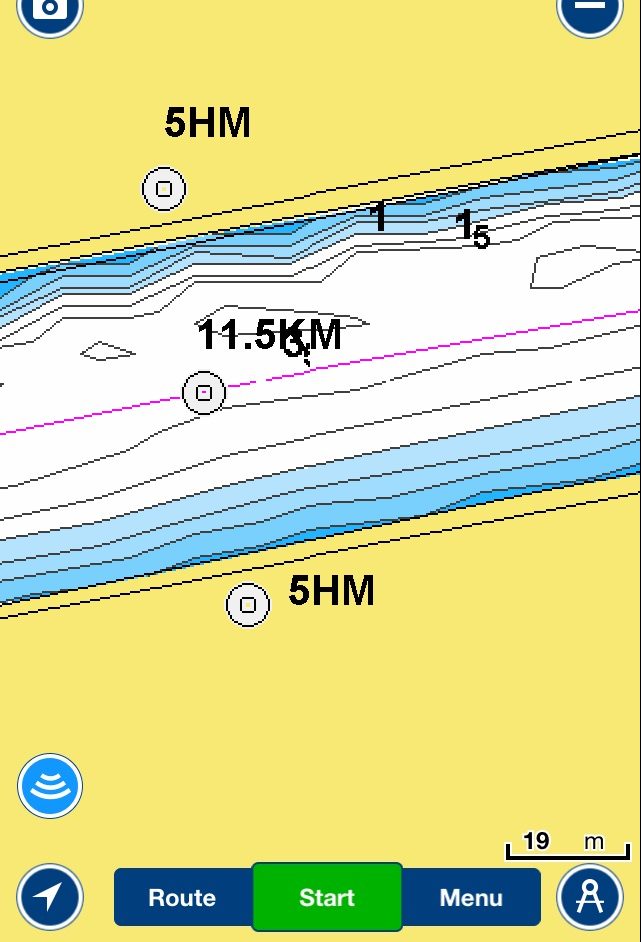
We had been sailing for many hours when we moved well over towards the right bank to pass an oncoming barge.
Once the long barge had passed, we moved back towards the middle of the canal.
A Close Encounter of the Third Degree
Suddenly there was a horrible, dull thud.
We had hit something very hard.
We looked at each other in shock.
We were both still standing, so we could not have hit it head-on. Heron was still moving forward and the depth sounder showed 1.7 metres, so we had come free of whatever we had struck. Heron had turned to port, which meant that in all probability we had clipped the hard object with the starboard keel wing.
I went below. Everything was in its usual place apart from the thermos flask, which had fallen into the sink.
I lifted the floorboards. We were not taking on water. Then I checked the keel bolts. There was not so much as a tiny drop of water around them. No cracks or crazing in the bilge or hull. Finally, I checked the diesel tank, engine, cooker, stern tube, seacocks and the through-hull fittings for the depth sounder and log. Everything was as before.
Conclusion
We had been lucky in our encounter with what we hoped was the only hard, unmarked object on the 2,100-kilometre route to the Mediterranean.
That did not mean there could not be a nasty gouge in the keel.
Finally, we called the insurance company. They made a note of the grounding and approved our plan to continue the voyage and assess any damage when Heron was hauled out for the winter.